
Reopen, do it now, right now…oops, sorry.

This is also ministry

Sorry you all were infected… sorry some of you didn’t survive… so sorry.

All this banter back and forth about reopening. All this chatter about how our congregations are hurting. All this talk about how we miss church. I have been wondering who misses church and what they actually miss.

I lead a small congregation. On an average Sunday we would see 30 to 35 people. We would occasionally see a new face, but not often enough to stem the shrinkage. There are the dedicated faithful who come every Sunday. I do miss seeing them all. I miss the feeling of seeing people. “I miss” seems to become the operative word in this press to reopen.

I have heard other pastors lament “I cannot be with my congregation.” – “I miss seeing the familiar faces.” – “How can I pastor to a congregation that never meets in person?” You might notice the key focus isn’t outward, it is inward.

While it is true we are called to minister to people, our primary goal isn’t meeting with people. Our primary goal is leading people to God through Jesus Christ. Of all of the ‘ministering’ we do, the calls, the prayers, the counseling, the church meetings, the weddings and funerals, all of these should only be about one thing, bringing people to know God.

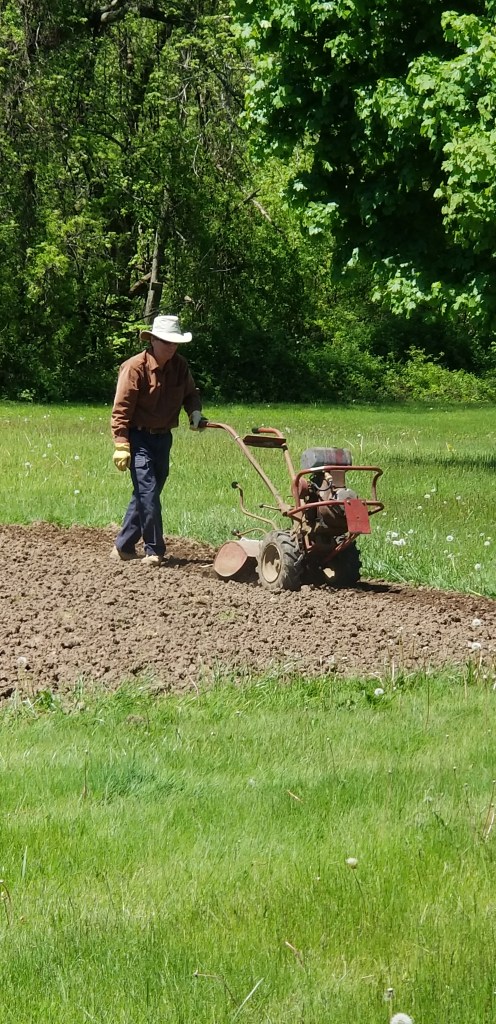
My church has a food garden where we grow vegetables for the local food pantry. I had to stop myself before I put my rototiller to work this year and ask – “how does this bring people closer to God?” “How does this bring someone new into a relationship with God?” It’s not just the garden, it’s all the activities, even worshiping together.

When we worshiped together did we plan each element of the service to focus people on God or did we plan it because ‘that’s the way we have always done it?’ I know the founder of Methodism, John Wesley valued traditions as a part of the faith but only a part. Wesley also did see value in community efforts to help the poor, to educate, to help those who were suffering but they were never the focus of his faith. His faith was so personal. It was about his own relationship with God.

So who is it that wants to ‘go back to worship like we used to have’ really? Sure, it was comfortable, familiar, and in some respects too easy. Worship as we used to do it also was failing. I know my church membership is declining. Attendance is shrinking, some of it aging out as the older members move south or pass away. So, I asked myself, “does planting this garden bring anyone new closer to God or am I just sweating out hear behind the noisy rototiller to keep what few people I have in my congregation?”

Do I want to return to services as they were because it was what people expected, comfortable, and familiar for me? I have heard from several people who used to attend my church on a very irregular basis. These are the Christmas and Easter people. They regularly comment on on of our online services now. They are worshiping at home. Many watch the online service on Sunday evenings, some later in the week. As I said, “Our primary goal is leading people to God through Jesus Christ” and I add, “however we can.”

Maybe I miss the in person services too much. Maybe I miss the gathering too much, so much so that I lost sight of the real calling to ministry. Online worshiping is different, like online shopping is different. It reaches people differently and it reaches different people.
Our average online worship is 33 minutes, 21 seconds. Yes, we actually have these facts available. Let that sink in a minute. How is it possible to minister in such a short time? Well, people online are distracted. They can pause the service and run to the bathroom or feed a crying baby. They can stop and restart the service and, they can leave without anyone knowing they left. In our in person worship services, I have witnessed people ‘leaving’ in the middle of the service while remaining in place. You know, the nodding head, the person stealing a quick look at their phone. They cannot get up without embarrassment but they leave just the same.

So maybe online worship is a better way to minister? Back in the 70’s and 80’s online television preachers were all the rage. I remember my mother going over to the TV on Sunday morning to ‘attend’ Rev. Robert Schuller’s Crystal Cathedral church service. Even today, before the pandemic, there were very few large churches that did not have a robust online service. For them, the in-person challenge doesn’t exist. They have always had online worship.

I finished tilling our garden plot. Yes, it is a ministry. Feeding the poor supports our Christian values of serving others in need and yes, it is a ministry because it is an outward sign of those Christian values. Even when running the rototiller I noticed people driving by slowing, trying to figure out what that church is doing with their lawn. That garden is exactly like online worship. An outward focus instead of an inward focus. Do I miss in-person worship? Of course. Will it ever return to what it was? Not if I can help it.


How we currently do online worship

Our setup:

We initiate a Zoom meeting which can be started by the first person that joins. I’ve started to notice that this has become an informal fellowship time and often people are already there before I ‘enter the sanctuary’… join the zoom meeting. They are quite often exchanging concerns, needs, even prayers. I think the earliest I have seen them on it 10 minutes before.

When I join, I usually spend less than 5 minutes chatting with people and then I mute everyone, and I start the VLC application with the prerecorded service and share the application (it is done through the screen sharing but sharing the application seems to work a lot better). I always check to share computer video and optimize sound in the Zoom sharing panel).

Why do I use Zoom? Because it allows those without cable or a computer to join via phone, something that Facebook and YouTube cannot do. I think I could actually now stream to Facebook, YouTube and do Zoom with the vMix software. Something I will have to check out.

After the video is done, we come back to the ‘faces’ screen on Zoom and I ask for prayers. I am asking for prayers that I will then incorporate in my daily prayers and I ask the participants to do the same, I don’t pray with them, there were plenty of prayers in the service, but this is personal. This takes < 5 minutes as well.

Our average service over the past 12 services has been 33 minutes, 21 seconds. Add in the beginning and end time on zoom (a total of 10 minutes max) and that brings us to 43 minutes.

What’s in each service?
• Introduction – this is a short 1 minute piece that says what we are going to be exploring during this service. It is there for people who are jumping around looking at videos. I also post this intro the day before.
• Prelude music
• Gathering Prayer
• Hymn
• Prayer of confession
• Scripture reading
• Hymn or other music
• Gospel
• Message
• Prayer
• Hymn or other music
• Benediction
• Postlude

I gave up (sort of) on a response prayer, after I noticed people on zoom reading the whole thing.

I have heard many times that my congregation likes having the music even if they do not sing along (although on Zoom I have seen several singing), they also like the prayers. When I ask them what they are doing (those who I cannot see on Zoom) sometimes they say they are sitting and listening other times they go to the kitchen and get a refill on their coffee or tea. Sometimes they go deal with the kids… pretty much like any service.

The entire service is also posted on our website and an indirect posting is done on Facebook. I don’t put the video on Facebook, I put a direct link to our webpage where the video is. Why? Because I want to drive people to our website to be able to see what else we are doing, announcements, and also because they can submit a contribution there. Our indirect contributions online have been steadily growing. It isn’t a lot but these are people who typically don’t pledge but probably would put money into the plate. I don’t have that option in Facebook (yet).

What have we cut out of the service? That’s a really good question. Passing the plate (we do have a slide up during one of the musical pieces directing them to our contribute page), announcements (that’s why we send them to the web page) and symbolic processes. I tend to use pictures and scenes to convey that during various parts. Think of using a video screen during the scripture during in-person worship, it is like that online as well. Same with music, words and scenes. I don’t take any time for lighting a candle or other symbolic acts but there is a slide to invite them in preparation for this time to do that or what enables them to be ‘set apart’ from the world for a while.

Posted in Pastor | Tagged | Leave a comment

Pilot and Pastor and the basics

Each year as a Licensed Local Pastor I have to have my license renewed. Part of that process is to come before the ‘District Committee on Ministry’ or DCOM. I recall my first DCOM, where I was hoping to be licensed for the first time. I was terrified. I had no idea what to expect. Was this to be a tribunal? Some form of examination like a PhD candidate goes through?

My friend said, “maybe you should read that before you go before them.”

I recall asking a friend who was a retired minister what I should do to prepare. He said “how are you on the Book of Discipline?” The ‘BoD’ is the book that the United Methodist church uses as its polity manual. Think of it as a Constitution and a book of laws all rolled into one. It sets forth what we believe, our organizational structure, the layers of office, even how to operate the local church. It is a book of rules and contains a lot of them. My copy of the 2016 BoD is 818 pages. My friend said, “maybe you should read that before you go before them.”

Years ago, I began a different journey, one that also had a big book of rules. That book was called ‘The Pilot’s Manual, Ground School.’ Like the BoD, it was filled with facts figures, lists of authorities, and how-to’s. The journey was also about a license of sorts, a license to fly an airplane. You aren’t actually given a license by the FAA, you earn a certificate. My instructor gave me an abbreviated version of the Pilot’s Manual, a student copy. Maybe he did not want me to run away screaming when I saw the size of the real thing. We would spend the next six months, every weekend, going through that manual, section by section. The goal was similar. I would take a written exam and an oral exam (along with an actual flight exam) and if I could prove I had learned enough, I would get my ‘license.’

Learning to fly, has at its roots not the pleasure of flying but how to operate an aircraft safely to get you from one place to the next.

That training, learning to fly, has at its roots not the pleasure of flying but how to operate an aircraft safely to get you from one place to the next. Every bit of information in that training was designed to make me a safe pilot. The flying skill was something to be learned, the rules and knowledge in that book was critical to my staying alive. I took it very seriously.

So, when my friend said “How are you on the BoD?” I applied myself exactly as I did when learning to fly. My reasoning was “if it was important enough to put it in the BoD then it was important enough that I should learn it.” And so over the next month (my DCOM was a month away) I spent countless hours reading and studying the BoD. I read about the founding of Methodism, about our core beliefs. I read about the structures of governance, about leadership, I knew what it took to become and Elder, a Deacon, basically every position. I read and studied about management at the global, conference and local levels. I studied it all, cramming like in college, the night before an exam.

Pilots understand a lot of things can go wrong. They know they are sitting in a complex mechanical thing where they will be alone, responsible for their own and their passengers’ lives. They know that other planes will be around them, that weather is fickle, that engines can present problems. They gain the deep knowledge and they learn to be prepared. They practice over and over again how to handle things when they go wrong. Every two years they have to prove they have retained that knowledge in front of a flight examiner. Knowledge is the difference between staying alive and falling to earth.

“God, if this is what you want for me, I accept.”

It was this background and the warning from my friend that caused me to burn the midnight oil on the BoD before I went before the DCOM for my ‘flight exam.’ As always for things like this I arrived way too early. The meetings, there were a string of LLP’s having their reviews were being held at a church in meeting rooms down the hall. When I arrived I was told I could have a seat and wait. I instead went to the sanctuary and decided to spend a little time in prayer. My prayer was simple, “God, if this is what you want for me, I accept.” That’s pretty much it. I repeated it several times and then waited in silence.

The church secretary came to get me and I was greeted by a familiar and friendly face, David, another LLP who what chair of the DCOM. He loved to joke and with all seriousness (which was hard for him to do) he said ‘THEY are ready for you…” I knew his ominous voicing was meant to be a joke and it worked a little.

I recalled my flight exam decades before, the part where I actually got in the plane and flew not with my instructor but with a flight examiner, in this case Air Force Lieutenant Colonel Deeds. My instructor had keyed me up in much the same way. ‘Colonel Deeds used to fly for the Luftwaffe, a real stickler.’ When ‘the Colonel’ got out of his own plane, he flew in for the flight exam, he had a broad smile and not a hint of a German accent. A glance back at my instructor told me everything I needed to know.

We went into the meeting, there were eight people there. Some of them Elders (ministers), some LLP’s (also ministers), and two Laity. The meeting started with a prayer. From their we went on through a series of questions, some of these I had written answer for that I had submitted earlier. Some of the dialog was around a sermon I had submitted to them. At one point they came back and asked me about my response to a written question about ‘why Methodist?’ As a part of my answer I had said I had admired the structure, the organized way that the denomination was managed in particular I said that having the BoD was a great resource, like ‘The Pilots Manual’ was to a pilot. I reiterated that response again and they all looked at each other, somewhat confused by my answer.

“Have you read the Book of Discipline? All of it?”

One of the Elders asked me “Rick, have you read the Book of Discipline?” to which I replied “Yes, all of it.” There was a kind of stunned silence. Someone said, “All of it? Why?” I was a little confused at this point. I mean I was supposed to be prepared to be a minister and so I should know about all the structures and rules, as if my life depended on it, just like flying. My friend had encouraged me to study it after all and he was a seasoned minister. He had recently retied after decades of service. Of course I would read and study it.

So, I answered the “Why?” question, “Because I was told it was important to do.” Again the committee was strangely silent. “Who told you to read it, all of it?” I mentioned my friends name and the look in the room changed from confusion to smiles and laughter. “He was joking Rick.” was all I heard. Colonel Deeds, the German pilot was a patient, talented, warm, and friendly person. We took off together, he slowly walked me through all the things he wanted me to do and after we landed, he simply said, “Congratulations Pilot.”

During the DCOM meeting, I had prepared as I have done all my life. I had applied myself as I had learned to fly, as if my life depended on it. The DCOM group admitted that no one, no other LLP candidate had ever read the entire BoD and in fact most of them hadn’t either. That has stuck with me over the short years since that meeting. I have used that knowledge gained in studying the BoD to shore up a faltering church. I applied the principals within that book on organization and structure to navigate the denominational landscape through our challenges. I also came to realize that the BoD, like the Pilots Manual, lags behind the real-world. We Methodists are stuck in the middle of that redefinition around accepting the faithfulness of our brothers ans sisters on Christ that are LGBTQ.

“my basic studies as a pilot saved my life, more than once”

Perhaps we need to all revisit our basic understandings, our rules of flying if you will. I know that my basic studies as a pilot saved my life, more than once. I also know that getting our fundamentals as LLP’s requires us to have basic knowledge as well. Perhaps one day I wont be the only one who read the BoD, the whole thing, maybe just the first.

Posted in Pastor, Pilot | Comments Off on Pilot and Pastor and the basics

And now back to our studio…..

I could add a new ‘P’ to this blog, ‘Producer.’ As a result of the pandemic I can no longer lead worship in my church building. It has been a weird change, transforming what I was just barely getting comfortable with to something entirely new. I now have to plan a service where I won’t be present and neither will anyone else. Instead, I have become video producer, a not-exactly YouTube star.

I am one of the fortunate ministers in the area, my background is in IT. A quick look around my house will find, three laptops, two desktops, a small server, and maybe five tablets. My main computer I built from parts so I could play a few video games which happens to make it perfect for video production.

But having the technology and even knowing how to use the software and cameras does not make me into an online minister. I have read missives from our Conference that say ‘don’t change anything from the way you do it live’ and ‘even if you cannot be in your church, make a space like a sanctuary for your videos.’ I get it, some of my congregation wants to be back in the sanctuary or at least feel like it is familiar. They want the same format. They want a bulletin in their hands with all the words printed. They want to have the exact same experience that they had in church…. but they can’t and neither can I.

Last week I asked a few friends who go to a different church, a church with an online service that is mostly formed around the original in-person format, what they do during the online worship. This church streams their service live via Facebook although much of the service is prerecorded. The general response was something like, “Well, depending on what is on right then I am either watching or doing something else.” Of course I wanted to know what the something else was, hoping it was meditating or praying or reflecting on their faith. “Oh maybe go to the kitchen and get a cup of coffee” and “Go let the dog out” and “Go and wash up the dishes” and finally, “I use some of the time to vacuum.” Not what I was expecting.

Yes, we have all seen in an in-person service, the occasional nod-off, or someone looking at their phone but at least we have those moments where they are ‘forced’ to come back to the service. You know what I am talking about right? “Please rise for the next hymn” or “Now let us come together to say the Lord’s prayer.” At least with in-person services we have a physical interaction with the congregation and have pieces of the worship to help reattach to the service. Now, instead, they can vacuum and no one knows.

As a newly minted producer I think I need to pay attention to this. Online worship is not like in-person worship and any effort to make it so will dilute the message we have. Yes, any effort to make it feel the same, to make it comfortable will make it less important which is not what we are supposed to do. We are supposed to help people find Christ. We are supposed to help them connect the dots in their lives with the Gospel and bring them closer to God. We are supposed to help them see their place as a disciple and instead I fear we are helping them tune-out.

It is probably true that many of us have been leading in-person worship services that have been helping people tune-out as well. Why? Because we are comfortable with the service. We can copy last weeks bulletin and use it again with just a few tweaks. We don’t have to to work all that hard. We could do the same thing online and at least we know some floors would get cleaned.

As a producer we have to acknowledge the medium we are using and its limitations. We also can acknowledge the medium and leverage its strengths. Want to have your message on Baptism in front of the river Jordan? That’s a green screen option. How about including more than one person in your video message, a dialog? Multiple frames are possible.

I guess what I am saying is that if we just apply the format we are used to in-person, people won’t just nod off, they will turn off. Instead we need to change so that our service invites people to listen or watch (those are two distinct options you know). We have to give up on the interactive parts which were forced parts of the in-person service and provide a new way for interacting. Maybe at the end of the service start a Q & A session for people, a threaded discussion.

Instead of lamenting about how hard it is to produce our services maybe we can take this time to produce something new and reach a broader audience. Maybe, just maybe I need to add ‘Producer’ to my blog and stop whining about it and instead thanking God for the opportunity!

Posted in Pastor, Producer | Leave a comment